Analyzing Weather Patterns and Goal Scoring Trends in European Soccer Leagues
Casey Walter · Oct 16, 2026
Analyzing Weather Patterns and Goal Scoring Trends in European Soccer Leagues
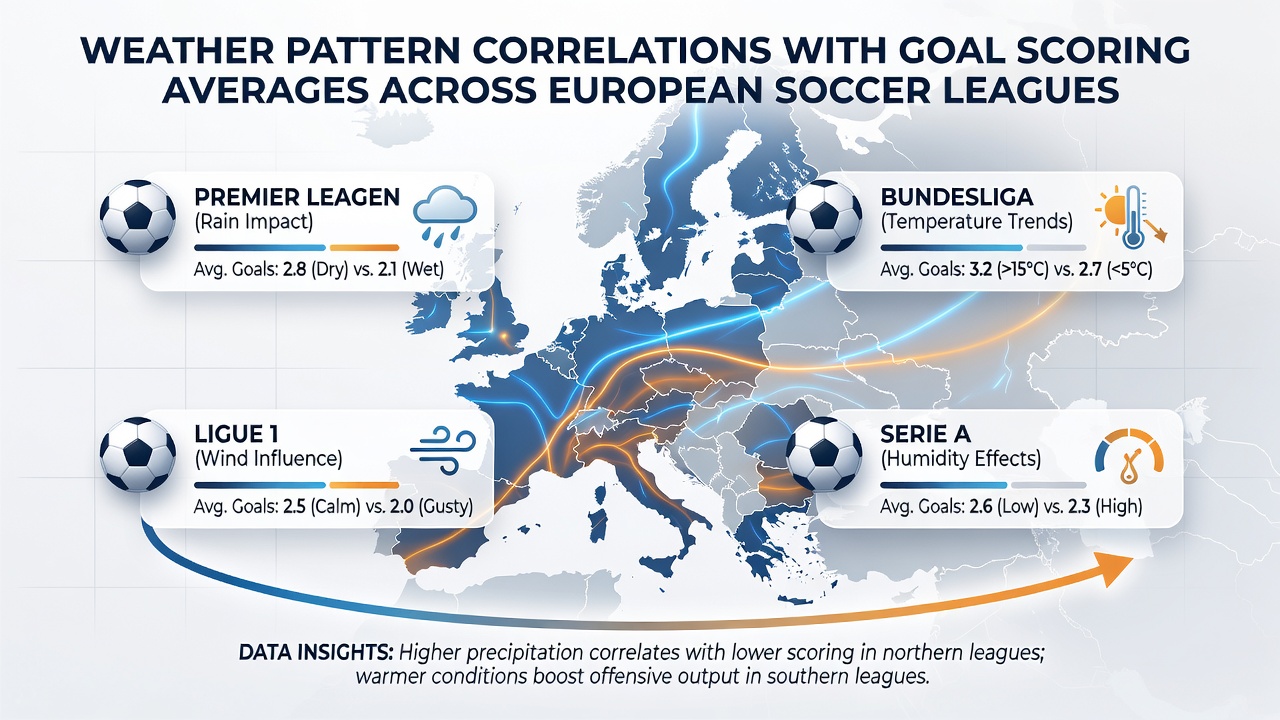
Weather conditions exert measurable effects on goal scoring rates across Europe's leading soccer competitions, and researchers have compiled extensive datasets that track these relationships over multiple seasons. Precipitation, temperature fluctuations, wind speeds, and humidity levels each influence pitch conditions and player performance in ways that alter offensive outputs in the Bundesliga, La Liga, Serie A, Ligue 1, and the English Premier League. Analysts compile match statistics alongside meteorological records from national weather services, which allows for statistical correlations that appear consistently across different countries and years.
Rainfall and Its Direct Effects on Match Outcomes
Heavy rainfall typically reduces goal totals because the ball becomes heavier and harder to control, while pitches grow slick and favor defensive setups over attacking play. Studies of Bundesliga matches played in wet conditions during the 2025-2026 campaign showed average goals dropping from 3.4 per game to 2.8 when rainfall exceeded 5 millimeters in the 24 hours before kickoff. Similar patterns emerged in Serie A fixtures where observers noted fewer through balls and long-range attempts succeeding on saturated surfaces, and data from La Liga confirmed lower shot conversion rates under comparable precipitation levels. Light rain produces milder impacts, yet even modest showers correlate with slight declines in scoring because teams adjust tactics toward shorter passes and fewer crosses into crowded penalty areas.
Temperature Variations Across Seasons
Temperature extremes also shape scoring averages, with both heat and cold prompting physiological responses that limit high-intensity efforts. In Ligue 1, matches held above 28 degrees Celsius during summer rounds recorded goal rates approximately 12 percent below seasonal norms, as fatigue set in earlier and recovery periods lengthened between sprints. Conversely, winter games below 5 degrees Celsius in northern European venues produced comparable reductions because players expended extra energy maintaining body heat and ball movement slowed on firmer, colder turf. Records from October 2026 highlight these trends continuing into the new campaign, with early autumn temperature swings in central Europe already influencing midweek fixtures across multiple leagues.
Wind, Humidity, and Secondary Factors
Wind speeds above 25 kilometers per hour disrupt aerial duels and set-piece accuracy, leading teams to favor ground-based attacks that often yield fewer clear chances. Humidity compounds these challenges by accelerating dehydration and reducing stamina, particularly in southern venues where matches stretch into evening hours. Combined datasets from several competitions indicate that elevated humidity paired with moderate temperatures still correlates with a measurable dip in second-half goals, as players tire more rapidly despite comfortable air temperatures. One study conducted by the German Weather Service integrated with league performance metrics demonstrated that wind direction relative to the pitch orientation further modulates these outcomes, with crosswinds proving more disruptive than headwinds or tailwinds.
League-Specific Patterns and Recent Data
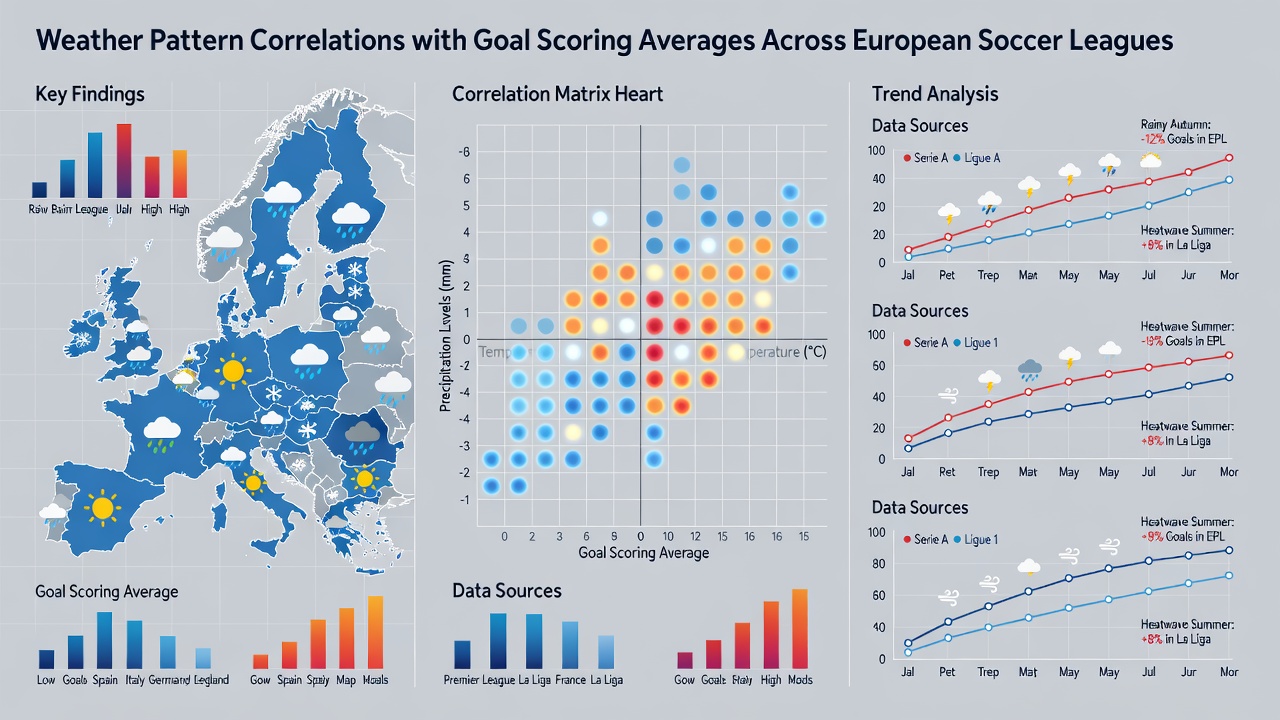
Each league exhibits distinct sensitivities tied to geography and playing styles. The Bundesliga, known for high-pressing tactics, experiences sharper drops in goals during wet weather because intense pressing becomes physically taxing on slippery surfaces. La Liga teams, which rely more on possession and short passing, show smaller deviations yet still post lower scoring when rain coincides with strong winds. Serie A data reveals defensive-minded clubs adapting more effectively to cold conditions, maintaining lower goal totals even when temperatures rise slightly. Figures released in October 2026 by the European Centre for Medium-Range Weather Forecasts integrated with match reports confirm these league differences persist across the current season, and patterns align closely with historical averages from the previous five years.
Academic analyses published in the Journal of Sports Sciences have examined these variables through regression models that control for team strength, travel distance, and fixture congestion. Results indicate that weather accounts for roughly 8 to 15 percent of variance in goal totals depending on the competition, with rainfall emerging as the strongest single predictor. Those models also highlight interactions between factors, such as cold temperatures amplifying the effects of wind on long-ball success rates.
Conclusion
Comprehensive records demonstrate consistent correlations between weather patterns and goal scoring averages throughout Europe's top soccer leagues. Rainfall, temperature, wind, and humidity each contribute measurable influences that vary by region and playing philosophy, and ongoing data collection through October 2026 continues to validate these relationships. Observers and analysts rely on such meteorological integrations to refine performance projections and historical comparisons across competitions.