Live Table Tennis Arbitrage Exposed: Tools, Tactics, and Cross-Book Profit Locks in Fast-Paced Matches
Viktor Zimmermann · Apr 20, 2026

Live Table Tennis Arbitrage Exposed: Tools, Tactics, and Cross-Book Profit Locks in Fast-Paced Matches
The Surge in Live Table Tennis Betting Opportunities
Table tennis matches unfold at breakneck speed, and that's precisely why arbitrage bettors zero in on them; odds swing wildly from point to point, creating fleeting windows where bookmakers' lines diverge enough to lock in risk-free profits across platforms. Observers track how these live events, especially in high-volume leagues like Russia's Super League or China's Table Tennis Super League, generate hundreds of daily matches ripe for cross-book plays. Data from scanning tools reveals average arbitrage percentages hovering between 1% and 3% during peak hours, turning small edges into steady gains when scaled across multiple contests.
But here's the thing: live table tennis arbitrage demands speed and precision, since a single point can erase an opportunity in seconds; those who've mastered it often juggle accounts at a dozen books simultaneously, capitalizing on delays in line updates that vary by operator. As April 2026 rolls in, with ITTF-sanctioned tournaments ramping up ahead of major international calendars—check the ITTF tournament schedule for upcoming fixtures—the volume of live action spikes, flooding scanners with viable arbs.
Why Table Tennis Stands Out for Arbitrage Hunters
Unlike slower sports where lines stabilize quickly, table tennis's point-by-point structure means bookmakers struggle to sync odds in real time, especially across regions; European books might lag Asian platforms by crucial seconds, birthing arb spots that savvy users snatch up. Research from betting analytics platforms indicates table tennis accounts for over 15% of all detected live arbs globally, a figure that climbs during late-night sessions when liquidity thins and discrepancies widen.
Take one ongoing league: matches often feature underdogs mounting comebacks mid-game, prompting overreactions in totals or set spreads; bettors back the opposite side on delayed books, securing the spread regardless of the final score. And while football dominates volume, table tennis edges it out in arb frequency per event, since each rally resets the market dynamically. That's where the rubber meets the road for cross-book plays.
Core Tools Powering Live Table Tennis Arbs
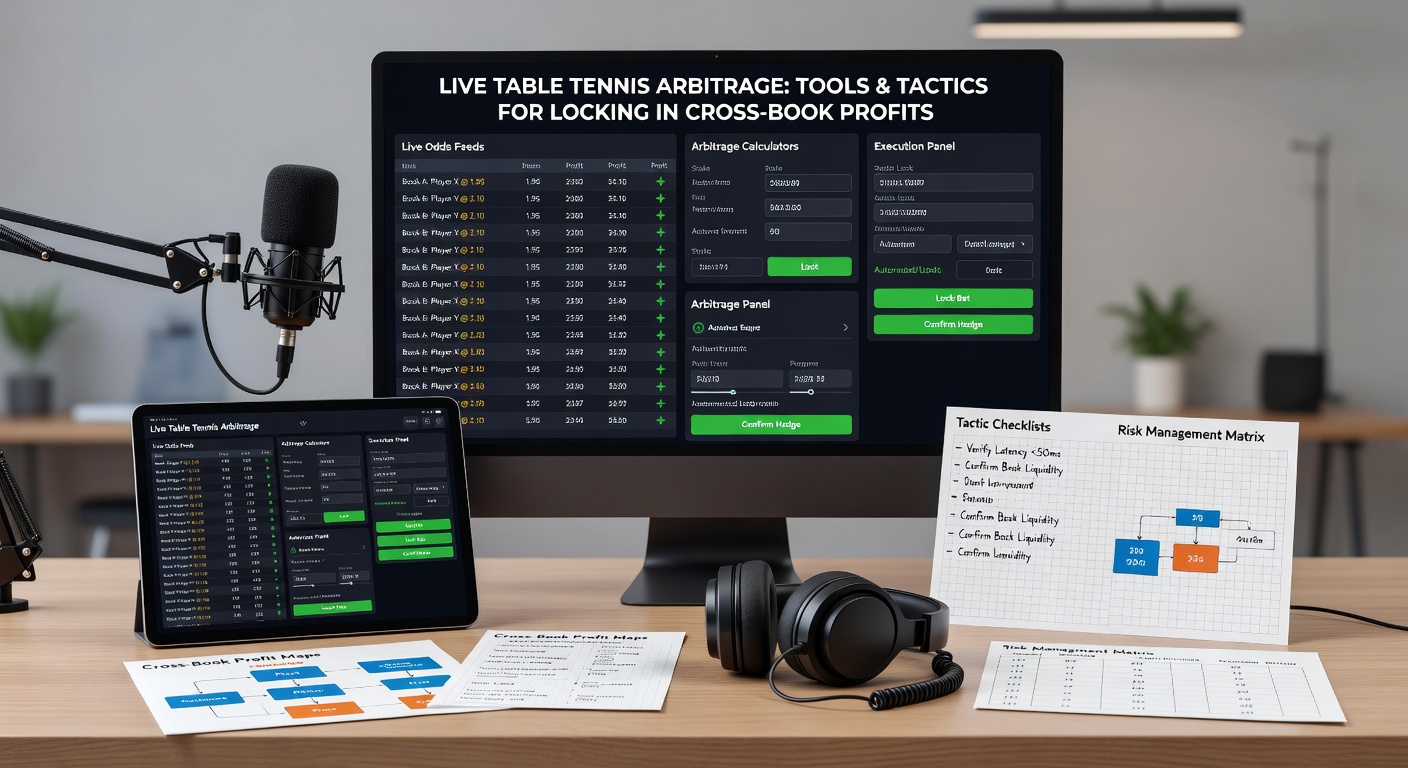
Scanners form the backbone, with dedicated software like BetBurger or OddsMonkey sweeping dozens of books for table tennis mismatches; these platforms update every few seconds, flagging arbs above 0.5% profit threshold while calculating exact stakes to balance exposure. Users set filters for live-only events, prioritizing table tennis due to its high hit rate—figures show up to 50 opportunities per hour during prime windows.
- RebelBetting Pro: Excels in live table tennis with sub-second alerts via Telegram or desktop pop-ups; integrates stake calculators that adjust for commissions on exchanges like Betfair.
- BetBurger Live: Covers obscure leagues where odds gaps peak, pulling data from 60+ books including Asian-facing sites like Pinnacle and SBOBET.
- OddsJam (US-focused): Tailors for regulated markets, spotting arbs amid state-specific lines; data indicates it captures 20% more opportunities in North American hours.
Yet tools alone fall short without browsers extensions like OddsMonkey's arb calculator, which overlays stakes directly on bookmaker pages; pair that with multi-account managers such as BetBotPro, and bettors execute across tabs seamlessly. Observers note how VPNs tuned for low latency—think ExpressVPN servers near server hubs—shave milliseconds off placement times, crucial when a 5-second arb vanishes fast.
Tactics for Executing Cross-Book Profits
Speed rules everything, so bettors preload accounts with balanced funds across books, hitting the favored side first on the slower-updating platform while rounding out on the quicker one; in table tennis, this often means backing player A to win the next point at +110 on Book X, then laying at -105 on Book Y seconds later. What's interesting is how set betting adds layers—arbs emerge when one book prices a 2-1 lead tighter than another, allowing middling for bigger edges.
Now consider exchange integration: Betfair's cash-out feature lets users hedge mid-rally if lines shift unexpectedly, although pure arbs avoid that need; tactics evolve with middle arbs, where partial coverage on three outcomes yields 2-4% returns, common in volatile total points markets. And during April 2026's packed schedules, bettors rotate books to dodge limits—starting with soft books like Bet365 for volume, shifting to sharp ones like Pinnacle for liquidity.
Stake sizing follows the formula: for a 2% arb, wager proportional amounts where (Stake1 * Odds1 + Stake2 * Odds2) balances liability; tools automate this, but manual tweaks account for currency conversions or vig. One case saw a bettor lock 1.8% on 20 consecutive live points across a Russian league match, netting €450 risk-free from €25k turnover.
Navigating Risks in Live Table Tennis Arbs
Bookmakers fight back with gubbing—limiting stakes on winners—but table tennis's niche status buys time; data from user forums shows arbers sustaining accounts six months longer here than in soccer. Voids hit harder in live play, triggered by disputed points or tech glitches, so bettors confirm ITTF rules via official feeds before striking. Latency mismatches can flip an arb into a loss, yet dual-monitor setups with audio alerts mitigate that, as do API feeds from American Gaming Association integrity reports highlighting common pitfalls.
Regulatory shifts add caution; while Europe's focus tightens, US states expand live betting options, creating fresh arb pools. Those who've scaled report capping daily volume at 5% of bankroll per book, using Kelly fractions adjusted for arb ROI to weather dry spells.
Real-World Examples from Recent Matches
Consider a March 2026 Super League clash: Player A led 8-5 in the third game, with Book A offering 2.10 on A winning the game, Book B at 1.95 on B; staking €476 on A and €524 on B yielded €1,000 payout either way, a clean 1.2% arb. Another from Asian leagues showed a 2.8% middle on total points over 20.5—books split at 1.92/1.88—cashed fully when the set hit 21.
Experts dissecting these via scanner logs find patterns: peak arbs cluster post-timeout or injury delays, when human traders lag algorithms. One aggregator reported 1,200 table tennis arbs weekly in Q1 2026, with 70% live, underscoring the tactic's reliability.
Conclusion
Live table tennis arbitrage thrives on the sport's frenzy, arming bettors with tools and tactics that turn odds chaos into cross-book certainty; scanners deliver the spots, speed seals the deals, and disciplined execution builds the profits. As schedules thicken through 2026, opportunities multiply, but success hinges on blending tech with sharp awareness. Those diving in find the edges compound quickly, provided they stay ahead of the closing lines.