Refining Bankroll Strategies Through Integrated Odds Analysis and Calculator Tools
Klara Beck · Jul 29, 2026
Refining Bankroll Strategies Through Integrated Odds Analysis and Calculator Tools
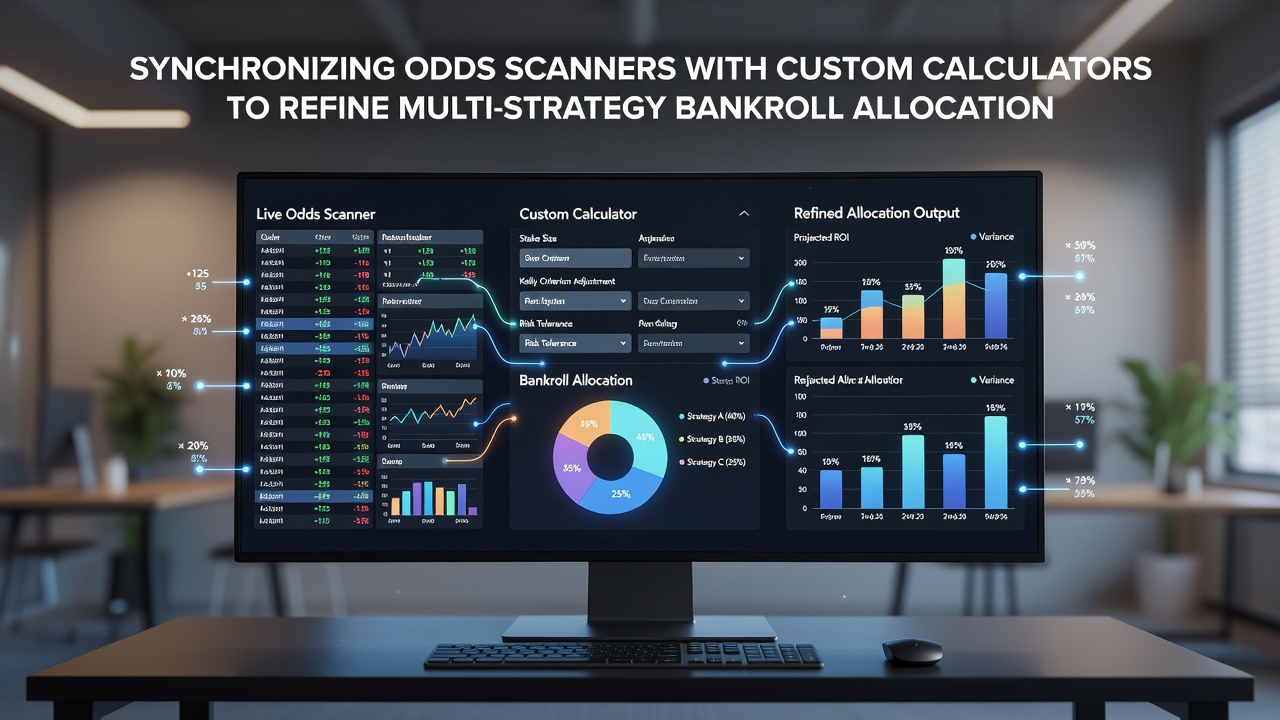
Odds scanners pull live data from multiple bookmakers while custom calculators apply mathematical models to distribute funds across value betting, arbitrage, and momentum-based approaches, and synchronization between these systems allows precise adjustments as market conditions shift in real time. Operators and bettors who combine both tools report improved allocation accuracy because scanners identify discrepancies in odds and calculators translate those discrepancies into percentage-based bankroll splits that account for variance across strategies.
Core Components of Odds Scanners
Scanners monitor thousands of markets simultaneously, flag deviations from expected probabilities, and export structured data feeds that include stake recommendations and implied edges, yet these outputs remain raw until paired with allocation logic. In July 2026 industry reports showed increased adoption of API-connected scanners among professional groups because direct data streams reduced latency between line movement detection and decision execution. Researchers at the University of Nevada, Las Vegas documented how scanner accuracy improved when operators filtered results through volatility thresholds before feeding numbers into external models.
Custom Calculators and Their Functions
Custom calculators accept scanner outputs as inputs, apply Kelly criterion variants or fractional staking formulas, and generate dynamic position sizes that respect overall bankroll limits while spreading exposure across uncorrelated strategies. Data from the Australian Gambling Research Centre indicates that bettors using multi-variable calculators reduced drawdown frequency by incorporating correlation matrices between different bet types. These tools also recalculate exposure after each settled outcome, which keeps the allocation model aligned with current capital levels rather than static starting amounts.
Integration Techniques and Data Flow
Integration begins with exporting scanner results in standardized formats such as JSON or CSV, then importing those files into calculator scripts that map each opportunity to a strategy category before running optimization routines. Automated scripts can trigger recalculations every fifteen minutes during peak market hours, and observers note that such frequency prevents over-allocation when odds converge quickly. One documented workflow routes scanner alerts through a middleware layer that tags each bet with its expected value and variance score, allowing the calculator to apply weighted constraints so no single strategy exceeds a preset percentage of total funds.
Handling Multiple Strategies Simultaneously
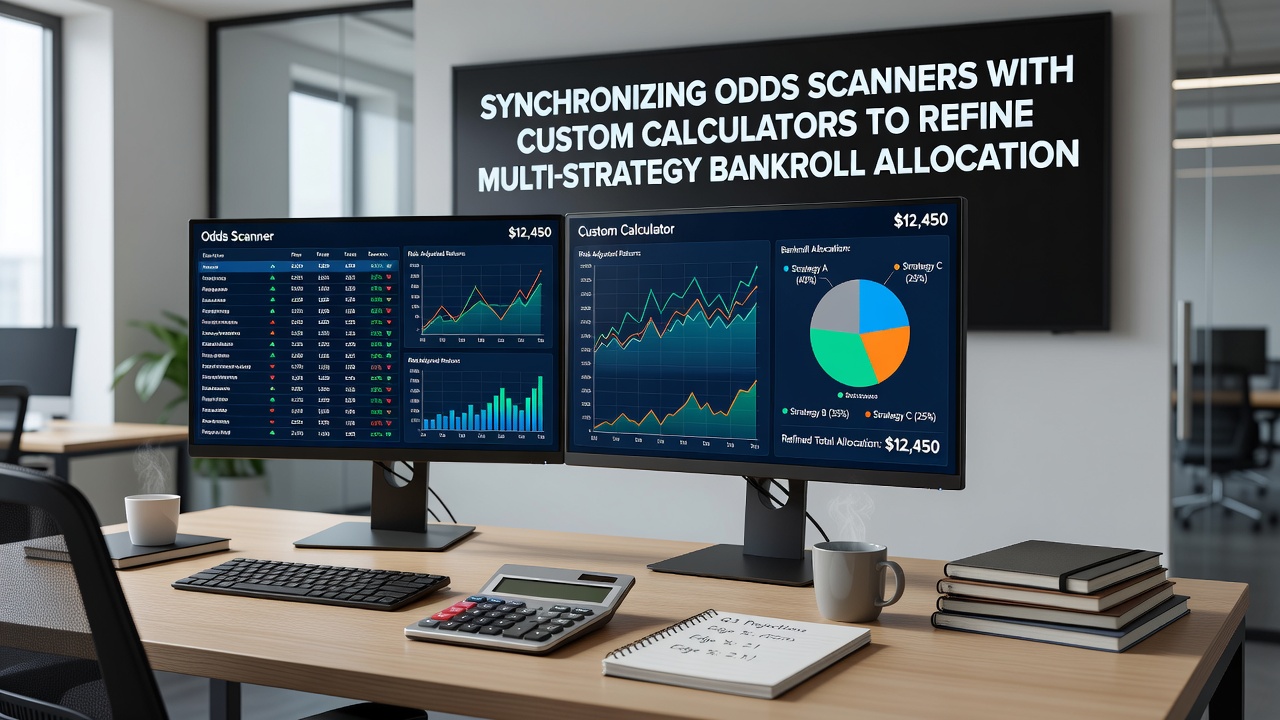
Multi-strategy allocation requires the calculator to maintain separate risk buckets for value bets, arbitrage plays, and situational edges while ensuring the sum of all positions stays within overall limits. Scanners supply the raw opportunities, calculators apply cross-strategy correlation adjustments, and the combined system outputs a single execution list that specifies stake amounts for each market. Studies published in the Journal of Gambling Studies demonstrate that synchronized systems achieve more stable equity curves compared with manual allocation methods because automated rebalancing occurs before emotional decisions intervene. Those who tested these setups during the 2026 season reported fewer instances of capital concentration in high-variance segments.
Technical Considerations for Reliable Synchronization
API rate limits, data formatting mismatches, and timestamp discrepancies represent the main obstacles to reliable synchronization, yet developers address these issues through scheduled validation checks that compare scanner timestamps against calculator input logs. When discrepancies exceed predefined thresholds the system pauses new allocations until data integrity is confirmed. Organizations that maintain redundant scanner sources find that cross-verification reduces false positives before they reach the calculator stage, which preserves bankroll integrity over extended testing periods.
Conclusion
Synchronized odds scanners and custom calculators create a closed feedback loop that continuously refines bankroll distribution across multiple betting strategies, and the approach relies on structured data exchange rather than manual intervention. Continued refinement of these integration methods depends on consistent data standards and periodic model validation, which together support more precise capital management as market volumes expand.