Tracking Momentum Shifts: Public Versus Sharp Bettor Activity in NBA Player Prop Markets
Morgan Keller · Jul 22, 2026
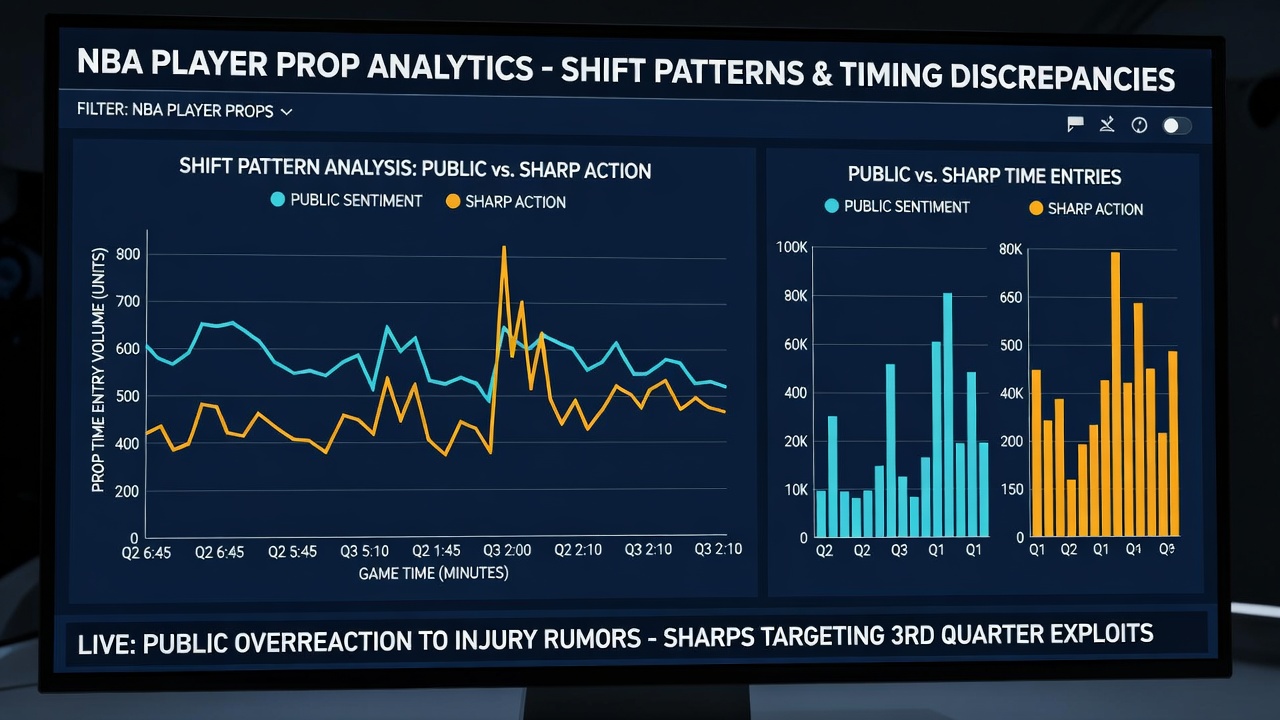
Tracking Momentum Shifts: Public Versus Sharp Bettor Activity in NBA Player Prop Markets
Line movement in NBA player props often reveals distinct phases where public bettors and professional sharp money diverge in both timing and scale, which creates measurable windows for entry decisions. Observers note that recreational money typically arrives early in the betting cycle, and this flow pushes totals or spreads in predictable directions before sharp operators respond with larger stakes that reverse or accelerate those adjustments. Data from recent seasons shows these patterns repeat across points, rebounds, and assists props, while the speed of the reversal often signals the strength of the opposing side.
Defining Public Action and Sharp Money in Prop Markets
Public bettors focus on popular players and recent performance trends, which leads them to pile into overs on points or rebounds after high-scoring games, whereas sharp money targets inefficiencies created by those initial surges. Researchers have documented that sharp operators wait for the line to move several ticks before committing, and this delay produces a secondary wave that frequently corrects the number back toward the closing line. Studies from academic sources indicate the average public wager size remains smaller, yet the volume creates enough movement to generate teh very discrepancies that professionals exploit.
Monitoring Line Velocity and Volume Indicators
Analysts track how quickly a prop line shifts after opening, and rapid early movement followed by a stall often marks the arrival of sharp action that counters the public direction. When a player prop opens at 22.5 points and moves to 23.5 within the first hour, then holds steady despite continued public interest, the pause suggests larger opposing bets have entered and stabilized the number. Those who study these sequences find the stall phase frequently precedes the most reliable entry opportunities, because the line has already absorbed the public pressure without further adjustment.
Seasonal Patterns and July 2026 Data Context
Offseason roster changes and training camp reports influence early prop lines each summer, and by July 2026 analysts had already observed how summer league performances created temporary public overreactions in rookie props that sharp money later corrected. Historical datasets reveal that props involving players returning from injury show the widest gaps between public and sharp timing, because public bettors overweight recent minutes while professionals incorporate usage rate models that account for load management. The resulting line movements tend to favor under entries once the initial hype fades.
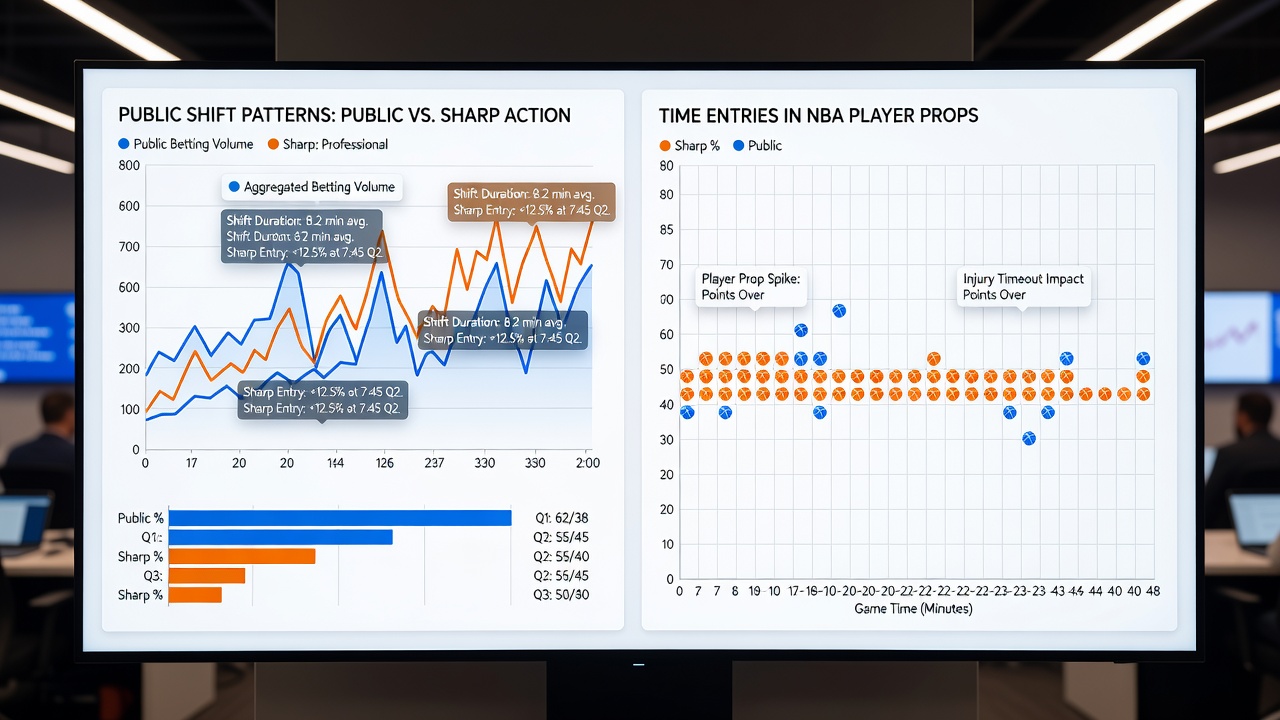
Entry Timing Strategies Derived from Action Divergence
One approach involves entering a prop after the public has driven the line but before sharp money has fully responded, and this requires monitoring both betting percentages and line velocity in real time. Another method waits for the sharp correction to complete, then takes the opposite side once the number stabilizes near its closing value. Evidence from multiple seasons shows that props where public money exceeds 70 percent on one side produce sharper reversals, and those reversals create the cleanest entry signals for the counter position.
Position-Specific Observations Across Player Roles
Point guard props often attract early public overs on assists because casual bettors focus on playmaking highlights, while sharp action tends to target unders when defensive schemes limit transition opportunities. Center and power forward rebound props display the opposite pattern, because public bettors underweight matchup disadvantages that sharp models incorporate quickly. Wing player points props sit in between, and the mixed signals produce more frequent mid-cycle adjustments that reward precise timing rather than early or late entries.
According to industry reports published by the American Gaming Association, professional bettors concentrate activity in the final hours before tip-off when line information incorporates the latest injury and lineup news. This concentration creates a secondary wave of movement that often overrides earlier public-driven shifts and produces the final line value used for settlement comparisons.
Integrating Multiple Data Streams for Confirmation
Combining betting percentage data with line movement timestamps and historical sharp action profiles improves the reliability of entry signals, because isolated indicators can produce false positives during low-volume periods. Observers have noted that props with consistent sharp follow-through across multiple games share common traits, such as stable opening numbers and gradual public accumulation rather than sudden spikes. Research from the University of Nevada, Las Vegas sports analytics programs confirms that these multi-signal alignments correlate with higher closing line value outcomes over large sample sizes.
Conclusion
Patterns in public versus sharp action within NBA player props continue to evolve with changes in betting market structure and data availability, yet the core sequence of early public volume followed by professional response remains consistent. Those who track line velocity, volume percentages, and timing windows can identify repeatable entry points that align with the observed divergence between the two sides. Continued collection of granular betting data will likely refine these observations further as additional seasons provide new test cases.