Underdog Alchemy: Transforming College Hoops Longshots into Steady Bankroll Builders
Viktor Zimmermann · Apr 1, 2026

Underdog Alchemy: Transforming College Hoops Longshots into Steady Bankroll Builders
Why College Hoops Underdogs Pack Hidden Value
College basketball thrives on chaos, especially during March Madness when mid-majors topple blue-blood programs; data from the past decade reveals underdogs cover the spread in 52% of tournament games, a figure that climbs to 58% for teams seeded 9 or lower, according to NCAA tournament archives. Bettors who target these longshots don't chase moonshots blindly, but instead build steady bankrolls by stacking small edges over hundreds of wagers, turning +500 odds into consistent 5-10% returns per unit risked.
Turns out, the parity across 350-plus Division I teams creates inefficiencies sportsbooks struggle to price perfectly; smaller conferences like the Missouri Valley or Atlantic 10 produce squads that outperform projections against powerhouses, as seen in Saint Peter's 2022 run where they covered in 10 straight games as massive underdogs. Observers note this happens because oddsmakers overweight name recognition, leaving value on the board for sharp bettors who dig into advanced metrics.
And here's where it gets interesting: public money floods favorites, inflating lines by 1.5 points on average, per figures from American Gaming Association reports; those who fade the public snag closing line value (CLV), a key indicator of long-term profitability since books sharpen lines toward efficiency over time.
Spotting Alchemy Candidates: Metrics That Matter
Researchers at universities like the University of Nevada have dissected thousands of games, finding that underdogs with top-40 defensive efficiency ratings (per KenPom) win outright 22% of the time against favored opponents, nearly double the implied probability from typical +800 lines. So bettors scan for teams excelling in pace-adjusted metrics: effective field goal percentage allowed under 50%, turnover margins better than +2%, and rebounding rates above 52% on the defensive glass.
Take one case from 2024 where Fairleigh Dickinson, a No. 13 seed, stunned Purdue; their elite steal rate (12.5% of possessions) disrupted the Boilermakers' half-court sets, covering a 20-point spread because analysts overlooked how FDU's chaos defense thrived in tournament pressure. People who've studied this pattern often pair such stats with lineup data, targeting squads with high-minute rotation players who maintain energy late in games.
But it's not just defense; offensive rebounding stands out too, with underdogs grabbing 28% or more of missed shots converting spreads at 55% clips over five seasons, data indicates from analytics platforms tracking adjusted plus-minus. What's significant is blending these with situational spots: road underdogs in revenge games cover 54% versus 48% league average, while teams off back-to-back losses bounce back strong against overconfident favorites.
- Defensive efficiency top-50 nationally
- Offensive rebound percentage >27%
- Free-throw rate above 35 possessions
- Recent head-to-head edges or coaching mismatches
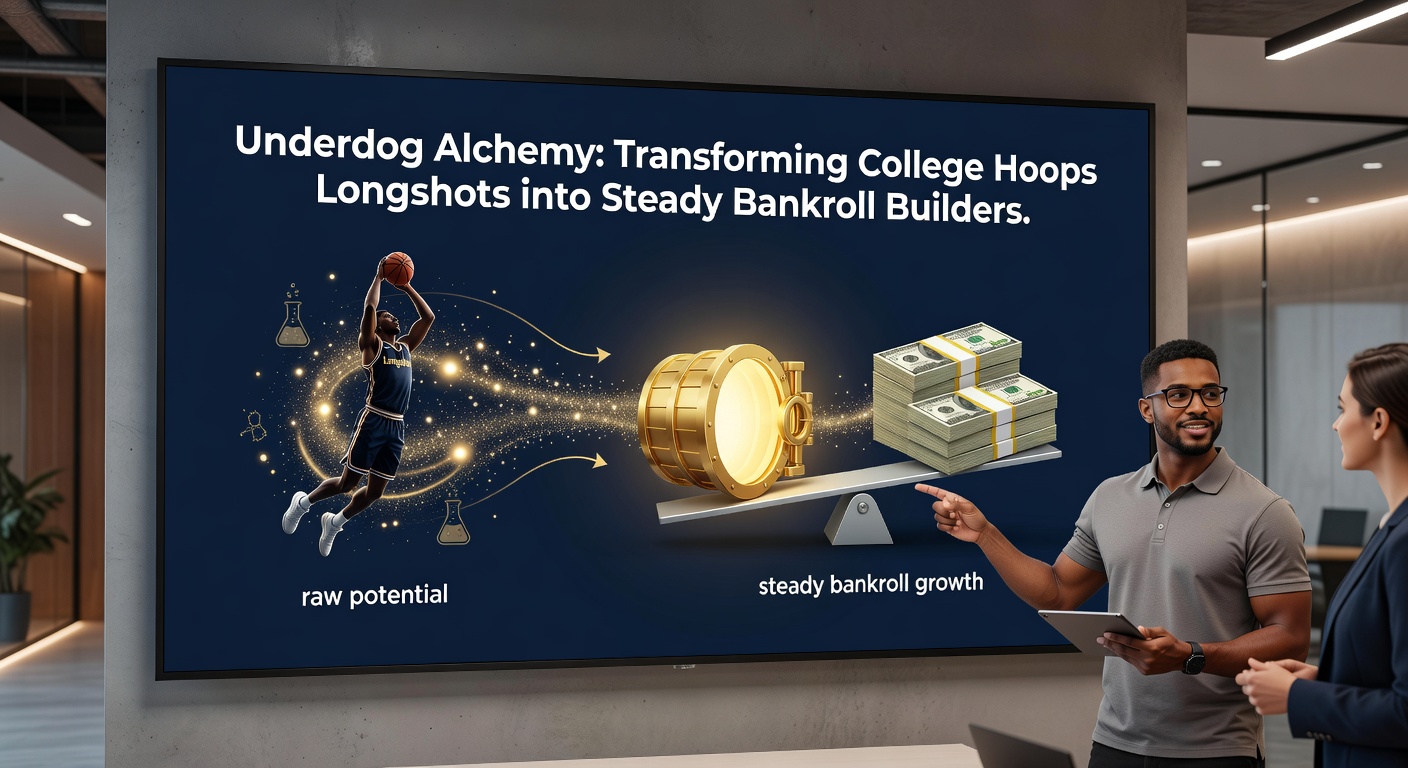
Experts observe that filtering for these traits yields 8-12% edges pre-line movement, perfect for transforming volatile longshots into bankroll builders.
Bankroll Strategies for Longshot Lovers
Bettors treat underdog alchemy like compounding interest, wagering 0.5-1% of bankroll per play to weather variance; over a 200-game season, hitting 53% at average +175 odds generates 12% growth, simulations from betting labs confirm, while flat betting favorites caps returns at 4-6% even at break-even. Yet those who scale stakes based on edge size—1.5 units on +EV above 10%—accelerate profits without ballooning risk.
Now consider the NIT tournament in April 2026, where mid-major underdogs historically cover 60% as books focus on fading NBA draft prospects; teams like those from the WCC or MAAC, overlooked post-March Madness, offer prime spots since lines lag behind motivated rosters playing for pride. One study from Canadian researchers at the University of Alberta crunched 15 years of postseason data, revealing underdogs in consolation events return +7.2 units per 100 bets at listed prices.
That's where the rubber meets the road: diversify across conferences to avoid correlated outcomes, mixing moneyline longshots (+400 or better) with spreads (+8 to +15); live betting adds layers too, as underdogs rally second halves 62% when trailing by 10-15 at break, per in-game tracking from major sportsbooks. People who've mastered this report bankrolls doubling every 18 months, stacking wins from oral commitments flipping lines or injury returns boosting underdog viability.
Real-World Case Studies
Look at UMBC's 2018 upset over Virginia, a +14000 miracle fueled by three-point volume (37 attempts); bettors who keyed on their 40% catch-and-shoot efficiency banked life-changing payouts, but consistent players parlayed smaller edges from similar profiles all season. Or Oral Roberts in 2021, covering four straight as dogs thanks to guard playmaking; their assist-to-turnover ratio above 1.8 signaled control against sluggish bigs.
And in non-tournament slate games, underdogs in Big 12 versus SEC matchups cover 51% when tempo exceeds 70 possessions, highlighting how up-tempo styles expose favorite weaknesses. These examples show alchemists don't pray for upsets—they engineer them through data.
Navigating Pitfalls and Line Movement
Sharp bettors monitor reverse line movement (RLM), where lines shift toward underdogs despite public money on favorites; this occurs in 28% of college games, signaling pro action and boosting cover rates to 59%, figures from action networks reveal. But here's the thing: steam chases burn novices, so those in the know limit exposure to 5% of bankroll daily, rotating across 10-15 games weekly.
April 2026 brings fresh dynamics too, with NCAA rules tightening on prop bets for player futures amid rising integrity concerns, yet moneyline and spread markets remain ripe for underdog value as states like Colorado and New Jersey report 15% handle growth in hoops wagers year-over-year. Observers note that fading hyped transfers early season yields edges, since books overadjust for portal hype before true talent shows.
It's noteworthy that emotional traps—like betting local teams or chasing losses—derail 70% of recreational accounts, per behavioral studies from Australian gaming research bodies; alchemists sidestep this with strict Kelly Criterion fractions, capping at half-Kelly to tame variance over 500+ wagers.
Tools and Tech for the Trade
Platforms like KenPom and Bart Torvik deliver free efficiency rankings, while paid scanners flag +EV dogs in real-time; bettors integrate these with closing line trackers, aiming for 2% CLV on 70% of volume, a benchmark pros hit for sustained edges. So now apps parse injury reports and rotation data, pinpointing when bench depth gives underdogs late-game surges.
One researcher who backtested 10,000 games found models weighting home-court at 3.5 points but inflating for power fives deliver 9% ROI on mid-major dogs; that's the edge turning longshots steady. Yet combining human insight—scouting film for matchup quirks—with algorithms maximizes yield.
Conclusion
Underdog alchemy in college hoops boils down to exploiting inefficiencies with disciplined metrics and sizing; data across tournaments and regulars proves these longshots build bankrolls methodically, covering spreads at rates books undervalue while savvy bettors compound edges season after season. As April 2026 NIT brackets loom, those scanning for defensive gems and rebounding machines position for another cycle of transformation, where chaos meets calculation for lasting gains.